Hybrid VMS Architecture — Cloud and On-Premise Video Management
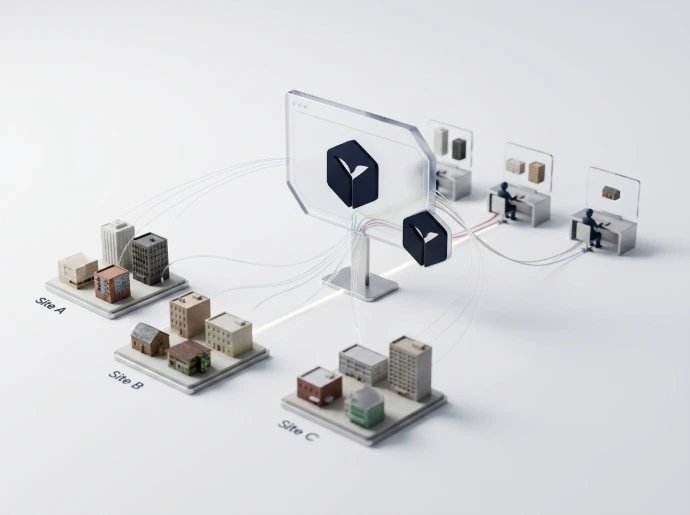
Okiff Reflex hybrid architecture lets you assign the right deployment model to each site — edge or on-premise where sovereignty demands it, cloud-native where scalability matters most — all managed from a single, unified dashboard.

What is a hybrid VMS architecture?
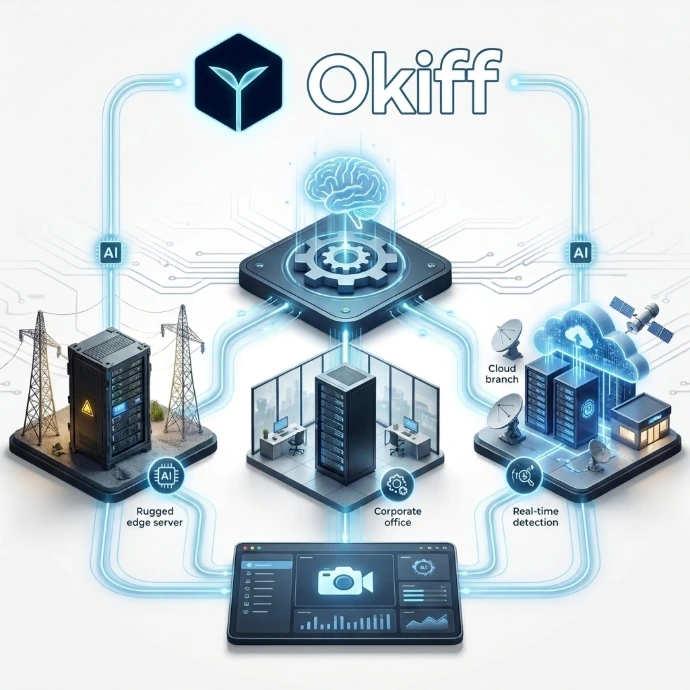
A hybrid VMS architecture is a video management configuration in which some sites or camera groups process and store footage locally (on-premise or edge), while others use cloud-based infrastructure — all managed through a single centralized platform.
In an Okiff Reflex hybrid deployment, AI intelligence and real-time detection operate at every node — regardless of whether that node is an edge server in a substation, a local rack in a corporate office, or a cloud-managed gateway at a retail branch.
The defining characteristic of Reflex hybrid is not just the mix of cloud and on-premise — it is that the platform makes this mix invisible to the operator. One login. One dashboard. One policy engine. Multiple deployment realities, seamlessly unified.
Why enterprises choose hybrid over a single-model deployment
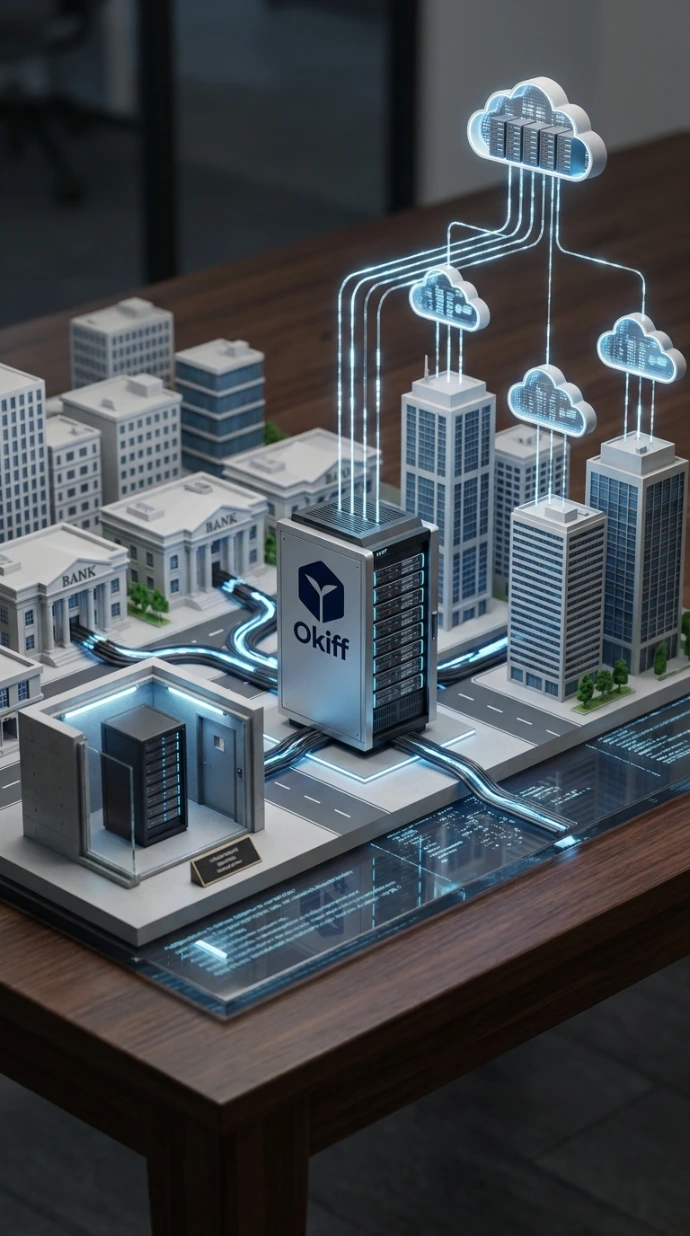
Regulatory Asymmetry
A financial services group may operate bank branches (requiring local data retention) alongside office buildings (suited to cloud delivery). A single deployment model cannot satisfy both without over-engineering one or compromising the other. Hybrid solves this without multiple platforms.

Bandwidth Economics
Transmitting raw HD video from every site to a central cloud is expensive and often unnecessary. Hybrid allows high-bandwidth, high-sensitivity sites to process locally — with only metadata, alerts, and flagged clips transmitted to the cloud layer.
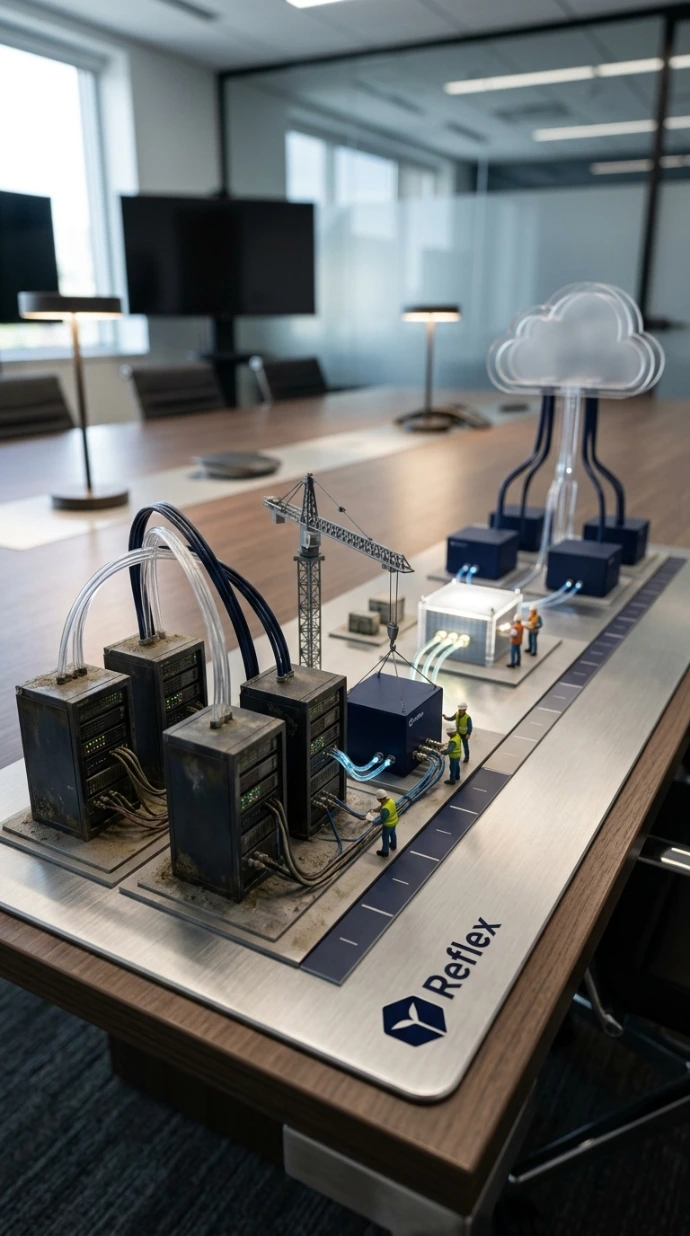
Legacy Infrastructure
Replacing every NVR across a 200-site estate is a multi-year, multi-million budget programme. Reflex hybrid lets you migrate sites progressively — cloud-enable new locations immediately, extend the life of on-premise nodes at mature sites, with no operational disruption during transition.

Resilience by Design
In a hybrid model, edge nodes operate autonomously if cloud connectivity is interrupted. Sites that need guaranteed continuity (transport, energy, healthcare) retain local intelligence while benefiting from centralized management in normal operating conditions.
Configure your hybrid footprint
Okiff Reflex gives you granular control over how each site or camera group is handled within the hybrid model. The following configurations are supported and can be mixed within the same deployment:
Site Type | Recommended Configuration | Data Flow |
| Full on-premise / air-gap | All data stays on-site |
| On-premise with cloud management plane | AI + storage local; alerts + management via cloud tunnel |
| Edge node + cloud storage | Local AI detection; footage synced to cloud |
| Router Agent only + cloud | Lightweight edge pre-processing; cloud-managed |
| Hybrid per tenant | Per-floor sovereignty configuration |
 Government / classified
 HQ / large facility
 Branch / retail
 Remote / mobile
 Multi-tenant building
Migrating from a legacy NVR estate?
Okiff Reflex is the most practical migration path from NVR-based infrastructure to modern VMS — because it does not require a rip-and-replace approach.
The Reflex Router Agent creates a software-defined bridge between existing IP cameras and the Okiff Reflex platform. Cameras are not replaced. NVR hardware is decommissioned progressively, not all at once. New sites coming online are deployed directly as cloud or edge-native; mature sites are migrated at a pace that matches your capital plan.
The result: you move from a fragmented, multi-vendor NVR estate to a unified, AI-capable VMS — without a budget shock, without a surveillance gap, and without re-cabling a single camera.

Connect Reflex Router Agent to existing camera network

Auto-discover all connected RTSP / ONVIF cameras

Choose deployment mode per site (cloud, on-premise, or edge)

Enable AI detection models immediately on existing infrastructure

Decommission NVR hardware as part of your asset refresh cycle
One dashboard. Any mix of sites.
Regardless of how each site is deployed, all Okiff Reflex nodes appear in a single unified dashboard. Operators see:

Live streams from every camera across every site
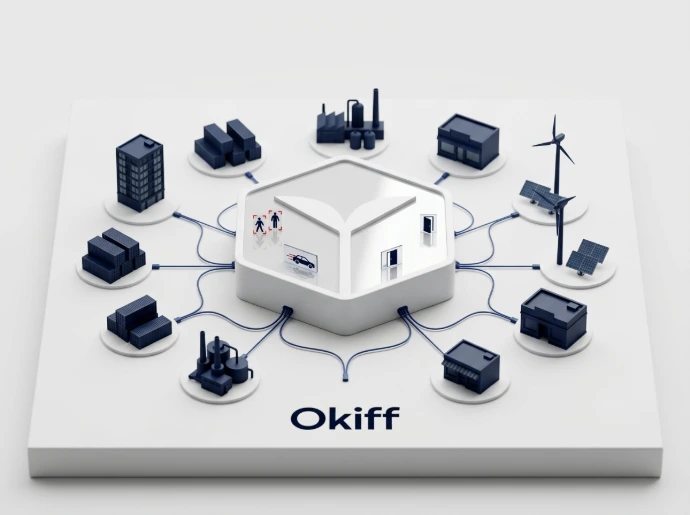
AI detection alerts with site context and severity

Event history and evidence export across all nodes
Role-based views — operators see only their authorized sites and zones

Deployment health — online status, storage utilisation, and update status per node
For security directors managing national or international footprints, this means fleet-wide situational awareness without compromising the data sovereignty of individual sites.
FAQ
What is a hybrid VMS and why would I use it instead of fully cloud or fully on-premise?
A hybrid VMS processes video data using a combination of local (on-premise or edge) infrastructure and cloud-based services. It is the right choice when different sites have different data sovereignty, latency, or bandwidth requirements — or when you are migrating progressively from legacy NVR infrastructure without full replacement.
Can Okiff Reflex treat different sites differently within the same hybrid deployment?
Yes. Each site or camera group can be independently configured as cloud-native, on-premise, or edge within the same Reflex deployment. The unified dashboard surfaces all sites regardless of their individual configuration.
Does the hybrid model compromise AI detection performance at edge or on-premise nodes?
No. All Okiff Reflex AI detection models run at full performance at each node, regardless of deployment type. Edge and on-premise nodes deliver sub-10ms AI inference locally. Cloud-managed nodes process AI detection in the cloud layer.
How does Okiff Reflex handle sites that lose cloud connectivity in a hybrid setup?
On-premise and edge nodes in a hybrid deployment operate fully autonomously when cloud connectivity is lost. AI detection, recording, and local alerting continue without interruption. Footage and event data synchronise to the cloud layer when connectivity is restored.
Can I migrate from a hybrid deployment to fully on-premise or fully cloud later?
Yes. Okiff Reflex does not lock you into a deployment architecture. You can reconfigure individual sites at any time — moving from cloud to edge, or adding on-premise nodes — without re-deploying the platform.
Your infrastructure is complex. Your VMS doesn't have to be.
Our deployment architects will map your existing infrastructure, compliance constraints, and growth plans to the right Reflex hybrid configuration — before you commit to anything.